
I’ve spent a long time thinking about what democracy is for. Not the textbook version of elections, representation, checks and balances, bills becoming laws. I’m interested in a deeper question: what does it mean for people to genuinely shape the conditions of their own lives?
Lough Neagh has been one of my most unexpected teachers.
I grew up on the shores of Lough Ree (Loch Rí) in the Irish midlands, another great lake, another water that shaped a landscape and the people who lived beside it. I didn’t have language for what that meant to me for a long time. Over the past five years, exploring my relationship to land through a decolonial lens, I’ve been trying to find it. Learning to sit with questions about belonging, about what it means to be from a place, about the kinds of knowing that don’t make it into policy documents or public consultations. About how we become alienated from the land, and stop being able to hear it speak to us – miss its cries and its warnings, lose the wisdom that sits in places.1
That work, which will continue for the rest of my life, has changed how I think about and practice this thing called democracy. And it’s part of why Lough Neagh has been at the forefront of my mind for these last 12 months.
I came to this crisis not as someone with family roots on its shores, but as someone who has spent years working on deliberative democracy – on Citizens’ Assemblies, public participation, and the architecture of processes that help people make hard decisions together. I arrived through that lens, drawn in by the question: what does democratic failure actually look like? And what could democratic repair look like?
What I found was both heartbreaking and clarifying.
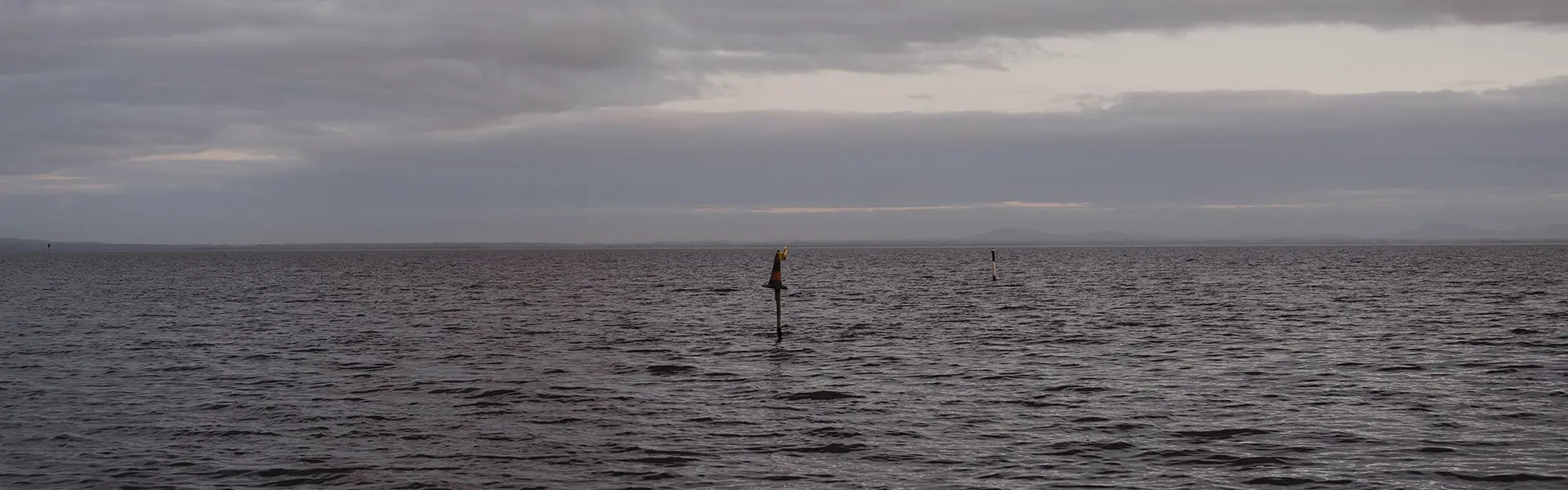
Lough Neagh is the largest freshwater lake in the UK and Ireland. It supplies around 40% of Northern Ireland’s drinking water. For generations it has sustained fishing communities, shaped landscapes, held stories. And over the past few years, it has been visibly dying, with toxic algael blooms spreading across its surface, wildlife disappearing, water quality rated at ‘bad’ ecological status. Experts say it could take decades to restore, if restoration is even possible.
There’s no mystery about what caused it. Agricultural runoff, sewage overflow, decades of weakened environmental governance. The knowledge has been there. The warnings have been sounded, loudly, repeatedly, by communities, scientists, campaigners. People have marched. People have held wakes on the water’s edge.
And still, the political response has lagged far behind what the moment demands.
This is what democratic failure looks like. Not dramatic. Not sudden. A slow accumulation of decisions deferred, accountability avoided, voices unheard until the water turns green and you can see the consequences from space.
What I keep returning to is this: the crisis at Lough Neagh is not just environmental. It’s a crisis of democratic imagination.
The people who live with this lough, who fish from it, drink from it, walk its shores, swim its waters, depend on it in a very real way, have had almost no meaningful say in how it’s governed or what happens to it. Northern Ireland remains the only part of these islands never to have commissioned a Citizens’ Assembly, despite it being committed to in the 2020 New Decade, New Approach agreement. The democratic infrastructure simply hasn’t been built.
And yet when I look at what’s been happening on the ground – the community groups, the campaigns, the extraordinary breadth of people who have come forward to say this matters, we are here, we will not look away – I see something else too. I see the raw material of a different kind of democracy. One that is waiting to be convened.
Over the past year, we’ve been exploring what a Citizens’ Assembly for Lough Neagh could look like. Not as an abstract possibility, but as a real, designed, deliverable process – one that brings together a representative group of people to hear evidence, deliberate, untangle the complexities and paradoxes and come to conclusions that carry genuine democratic weight.
The questions such an Assembly would need to sit with are hard ones: Who owns the lough, and who should? What does accountability mean when failure has been so systemic? How do we speak for future generations – and for the lough itself – in democratic deliberation? What would a recovery plan look like if it were genuinely built with communities, rather than handed down to them?
I don’t think there are easy answers. But I’ve learned, over many years of this work, that when you create the right conditions – when people are given time, information, and genuine respect – they are remarkably capable of holding complexity, finding common ground, and making wise decisions. That’s not naive optimism. It’s what the evidence from assemblies around the world consistently shows.
Which brings me to 27 March, and why I’m writing this now.
On Friday 27 March, we’re hosting Listening to the Lough – a day of democracy, care and imagination at the Crescent Arts Centre in Belfast, as part of the Imagine! Belfast Festival of Ideas & Politics. It’s a Pay What You Can event, because this conversation belongs to everyone.
The day is designed as a genuine experiment – not a conference, not a lecture. It opens with a family-friendly creative session exploring the lough as teacher. It moves into an unconference, where participants set the agenda and lead the conversations that matter to them. And in the afternoon, we run a Citizens’ Assembly taster session – a facilitated, hands-on experience of what deliberative democracy could actually feel like in practice, focused on a real question about Lough Neagh’s future. The outputs will feed directly into our ongoing Assembly design work.
I’m genuinely excited about this day. Not because I know what will come out of it – I don’t – but because I believe something important happens when people come together to really listen. To the lough. To each other. To what this moment is asking of us.
If you work in or care about deliberative democracy, participatory processes, or the relationship between ecological crisis and democratic renewal – I’d love for you to be there. And if you know people in Northern Ireland for whom this hits closer to home, please share it with them.
This is the kind of work that only works if the right people show up.
Listening to the Lough – a day of democracy, care and imagination Friday 27 March, 10am–5pm Crescent Arts Centre, Belfast (Free/ Pay What You Can)
Rebekah McCabe is a democracy worker living in Belfast, writing observations on deliberation and how people can be wise together to shape our collective future.
Image Credit: Joe Laverty