
When we talk about politics, we often mean institutions. Parliaments. Policy. Elections. Power at a distance.
But there is another kind of politics happening all the time, much closer to home. It lives in community centres, libraries, church halls, pubs, parks, cafes and empty shops. It happens when someone sets up a table and invites others to make something together. It happens when people who might never normally meet share skills, stories, food, questions.
At Fun Palaces, we see this as the politics of everyday life.
Fun Palaces began with an unruly idea from theatre director Joan Littlewood in the 1960s: that culture should not be delivered to people, but made with and by them. The original “Fun Palace” was imagined as a building without a fixed programme… a place shaped by whoever walked through the door. The building was never built but the idea survived.
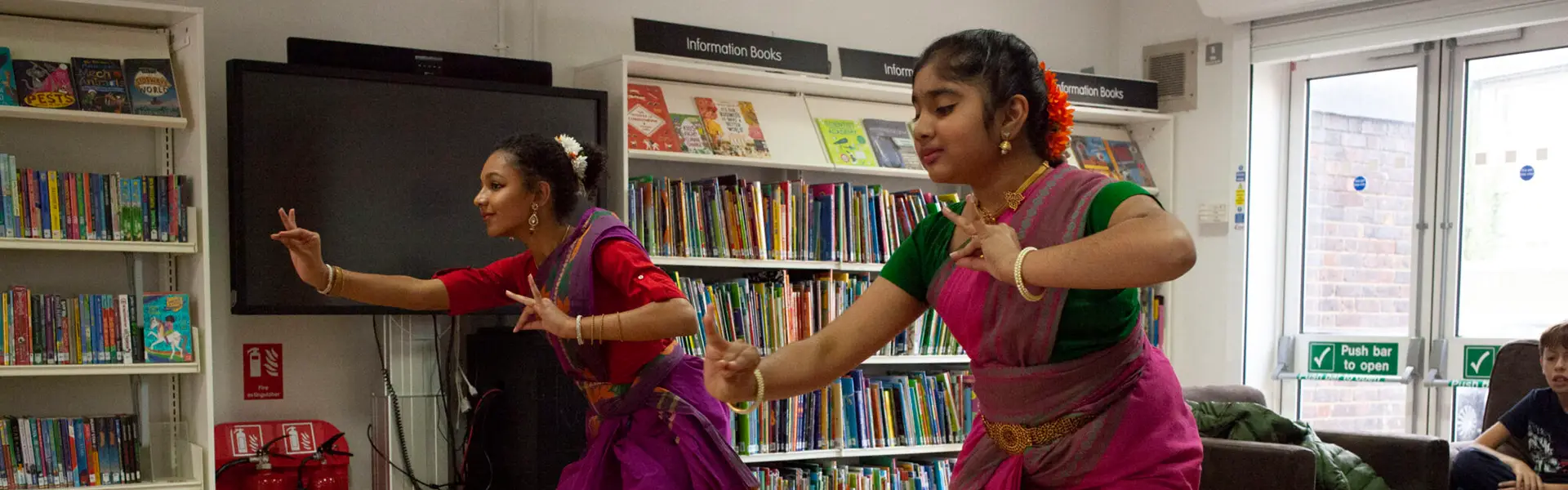
Today, thousands of community-led Fun Palaces happen across the UK, Ireland and beyond. They are small, temporary, often messy and chaotic, and they are quietly and joyfully radical.
Because when someone who has never seen themselves as “creative” teaches a neighbour how to repair a bike, or sew a button, or write a poem, something shifts. Confidence grows and power moves. That is political.
Play, in this sense, is not trivial. It is practice.
Play lets us rehearse different ways of being together. It creates low-risk spaces to experiment with power, voice and collaboration. You can test an idea or try leading, you can listen to someone you’d usually walk past. You can change your mind.
Belfast has a long history of community-led culture and self-organised creativity. It was built by people who understood, often out of necessity, that who gets to shape culture is a political question. With ongoing conversations about identity, belonging and the future, these small acts matter. Cultural democracy is not an abstract theory, it is the simple belief that everyone has the right to shape the cultural life of the place they live.
That might mean hosting a community science experiment. It might mean inviting stories about a neighbourhood’s past. It might mean reclaiming a public space for an afternoon of shared crafts and conversation.
None of these actions will change the world overnight. But they do something more durable: they build relationships. They build the habit of participation. And habits, once formed, are powerful.
Confidence gained in a craft workshop can translate into speaking up at a meeting. A shared creative moment can soften divisions that felt fixed. A room arranged differently can change who feels entitled to speak.
These are small acts. But they hold big ideas inside them.
The politics of play is not about avoiding difficult conversations. It is about creating spaces where those conversations can happen differently, more imaginatively and more generously, with more people in the room.
We live in a time when many people feel distanced from decision-making and wary of traditional power structures. Reclaiming everyday creativity is not a distraction from that reality… it is one response to it. Because when we practise shaping our cultural spaces together, we are also practising shaping our shared future.
At Imagine! Belfast, our workshop From the Grassroots Up asks what it might mean to build a culture-for-all campaign starting with people instead of institutions. What if we began with the question: What can you offer? What would you like to learn? What could we build together?
We’d love you to join us and bring those questions into the room.
Small acts. Big ideas. Everyday politics.
Orla Nicholls
Executive Producer, Fun Palaces
Image Credit: Dominic Saulter