
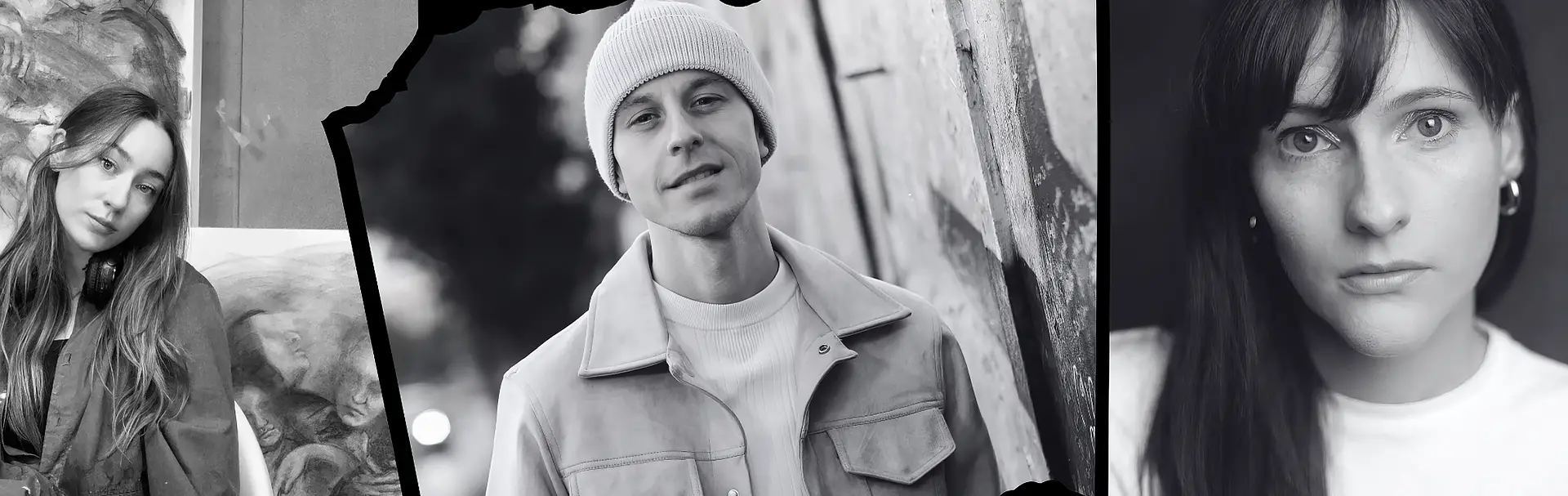
WeAreClass_ are hosting their first event as part of the Imagine! Belfast Festival of Ideas & Politics on 24 March 2026. The event is a chance to bring together artists, cultural workers, and creatives to share experiences, discuss barriers and imagine a more inclusive arts sector – one where working-class voices are not just present, but celebrated.
This blog explores my own experience, what WeAreClass_ is about, how it came about, and why you should join us for all the gegs and chats!
Like many people, creativity has always been part of my life. I remember as a kid my ma taking me to the museum or the cinema, or how buzzing I’d be getting a new colouring book or a Goosebumps to read. From school I knew one thing for certain: I didn’t want to study or work somewhere that bored me out of my tree.
Jump forward to the day of my A-Level results. My ICT teacher asked what university I was going to. I told them I wasn’t going to university – I was going to Belfast Met to study photography.
The look on their face was pure disappointment. I was scundered!
It was clear that I’d somehow become a disappointment for doing ‘art’, and also for not going through the ‘traditional’ academic route. That feeling wasn’t helped by someone close to me once saying, “People who go to tech are wasters – they’re just wasting time until they get on the dole.” Ouch.
Skip forward a wee bit and I ended up going to university anyway (TAKE THAT HATERZ) to study Photography. But because I didn’t have the luxury of financial support, I had to work part-time alongside my studies. The worst shift was cleaning from 5am–8am, before getting ready for 10am lectures.
Alongside that, I also took on unpaid volunteer roles in galleries to gain experience and bulk out the CV. That’s when I quickly realised the arts world had its own rules, language and expectations.
It appeared in subtle ways – who felt confident networking in certain spaces, who could pronounce the ‘right’ words, who knew the right people, and whose cultural references were recognised or valued. (Also, the embarrassment of them not understanding my cultural references – scundered for ya!)
It could be confusing, exhausting, and sometimes a wee bit intimidating.
But it wasn’t and isn’t all grim. I’ve met some (and continue to meet) the kindest, most generous people in the sector – people who share their time, knowledge, and even equipment just to help someone else get a foot in the door. Their generosity made me want to stick around, to keep learning, and that my work mattered. Still, kindness alone isn’t enough. The sector needs more funding, better resources, and real support structures to make opportunities genuinely accessible – not just to those who can scrape by doing unpaid work. When that support is in place, that kindness turns into lasting change, giving working-class creatives the chance to thrive, not just survive.
The more I moved through those spaces and progressed in my career (and my nerdiness for studying), the more I began to realise that the feeling I had wasn’t just mine. It was shared by many others.
That realisation eventually led me to create WeAreClass_ and to organise The Gathering, taking place on 24 March 2026 as part of the Imagine! Belfast Festival of Ideas & Politics.
In a survey of Northern Ireland workers, around 46–51% described themselves as coming from a working-class background. That’s nearly half the population. So why have we made parts of the creative and cultural sector feel so hostile to such a huge chunk of our society?
That question- and a fair bit of curiosity (pure nosiness really) – eventually shaped my research into how cultural policy and institutional structures influence working-class engagement with the arts in Northern Ireland.
I became interested in:
Through this work I realised the issue isn’t a lack of creativity or interest within working-class communities.
It’s about access, visibility and representation.
Most importantly, I realised there was a real need for education, knowledge-sharing, and spaces where these conversations could happen openly.
WeAreClass_ grew from that need and the fact I was going on all these rants with my colleagues and peers. I also was inspired by the work happening elsewhere with working class representation in the arts being showcased throughout the rest of Ireland and the UK.
Shout out to Hayley the mastermind behind Scottish Working Class Network! (Give them a follow)
It’s about amplifying working-class voices in the arts and creating a platform where experiences of class can be shared without apology or explanation.
Too often in Northern Ireland, class is the conversation that sits quietly in the background -if it’s mentioned at all. We tend to focus on what side of the wall you’re on instead.
But class still shapes who enters the arts sector, who stays, and whose stories are seen as culturally valuable.
WeAreClass_ The Gathering is an opportunity to bring people together to start those conversations.
Taking place at PS2 in Belfast from 5:45pm–8:00pm, the evening is designed as an open space for dialogue — where people can talk honestly about barriers, belonging and the future of the arts sector.
I’m pure bizz to have some artists whose work I admire joining the discussion (Shout out to Amanda, Leah & Gareth!) There’ll be plenty of insights, a few strong opinions, and maybe even a couple of gegs along the way.
But most importantly, it’s about community.
Many working-class creatives navigate the arts feeling isolated, as if they’re the only ones questioning the structures around them. But when people come together, those individual experiences start to form a collective picture.
And that’s where change can begin.
Working-class perspectives are an essential part of Northern Ireland’s cultural identity. Recognising and supporting those voices doesn’t just benefit working-class creatives -it strengthens the cultural sector as a whole.
How many times can I plug this?
WeAreClass_ The Gathering takes place on 24 March 2026 as part of the Imagine! Belfast Festival.
Whether you’re an artist, cultural worker, student, or just someone interested in these conversations, you’re very welcome to come along, have a nosey, and join the discussion.
And if nothing else – come say hiya to my ma.
Holly Foskett